Trust, the most important thing
The definition of TRUST
- Firm belief in the integrity, ability, or character of a person or thing; confidence or reliance.
- The condition and resulting obligation of having confidence placed in one.
This discussion group is, and will be, by invitation only. We want to keep it private so people can feel free to discuss openly any topics or points that may develop. This page is only accessible through the password entry point, all the following pages that are available from the menu below can only be accessed in this section of the website. The trust menu is only available in this section as well.
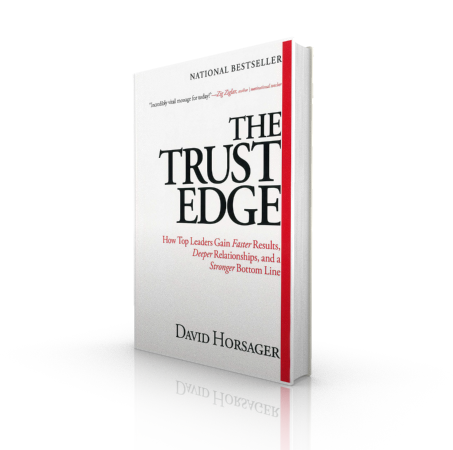
Trust, the most important thing is based on the book, “The Trust Edge”
by David Horsager
What is trust and what does it do?
Trust can accelerate any business, organization, or relationship. Distrust can destroy any business, organization, or relationship. Trust is a requirement for strong friendships, families, organizations, and businesses. Are you a person that others trust? Are you trustworthy?
David Horsager in his research on trust that he had done for his graduate work, found that trust is not just a virtue, but the table that supports all other virtues. It is an actual competency that can be measured.
Does it matter if I am trusted? Trust has a major impact on every area of your life as it relates to effectiveness. Whether your organization is large or small, whether your business is large or you have a small shed in the market, trust matters. If you teach and your students feel you are untrustworthy, they may question your lessons but if they trust you, they will listen carefully. People who are trusted will be effective.
David has broken his work on trust down into 8 supporting pillars, each one being a different area in which to build trust. He based his research on the characteristics, or qualities of top leaders in business and organizations. People who have been successful and have had significant positive influence on the lives of those they have served.
These pillars are significant for anyone who is interested in building support for genuine success. He refers to this as having “The Trust Edge”.
The impact of having THE TRUST EDGE
- Leaders will see expanded influence and increased morale among those they serve.
- Managers will see greater productivity and increased commitment from their people.
- People in sales will see increased business and positive results.
- People in service will see enthusiastic recommendations and loyal customers.
- Parents will see more peace and freedom in the home.
- Teachers will see more respect, impact, and classroom control.
As we work through this material you will see that each of these pillars represent qualities that should be found in those people who are active disciples of Jesus and whose lives are being transformed by the Gospel and the word of God.
Trusting others is one of the last sections of the book and helping individuals and organizations become trusted is certainly the main point. However, as Jesus teaches us in Matthew 7: 3-5, we are to examine ourselves first. That said, try to resist the urge to think about others and whether or not they should be trusted. We should take responsibility for ourselves first.
When we work on developing our own trust edge, we will enjoy greater success and impact. As we grow in trustworthiness we will have the best chance of affecting our organization, our families, our relationships, and even our world.
The Two Dimensions of Trust
There are two dimensions of trust, time and depth.
Time, sometimes, you will meet a person and in the first few minutes of talking with them you may decide whether you will trust them or not. Generally speaking, David compares trust to a forest. Like a forest, trust takes time to grow, and like a forest trust can be burned down quickly. Another dimension of trust is depth, over time in a trusted relationship, trust goes from shallow to deep. Deep trust can develop quickly if another trusted source verifies that this person is trustworthy, this is called transferred trust. A trusts B, and B trusts C, therefore A trusts C. When trust is deeply established a person is usually given the benefit of the doubt, rather than having his actions judged with skepticism.
Given the right dimensions of time and depth, trust can become a powerful tool for a leader. However, for this time of trust to develop it must be earned. It can be established by developing the 8 pillars of trust. I believe as we work together and interact through discussion we can help each other develop tangible, learnable, and measurable levels of trust.
Some questions to start discussion.
- How does trust affect you or your role?
- How would you, in your own words, define The Trust Edge.
- How do the dimensions of trust influence each other?
- Whom do you trust? Why do you trust them?
- Provide some verses from the Bible that supports these ideas regarding trust.